
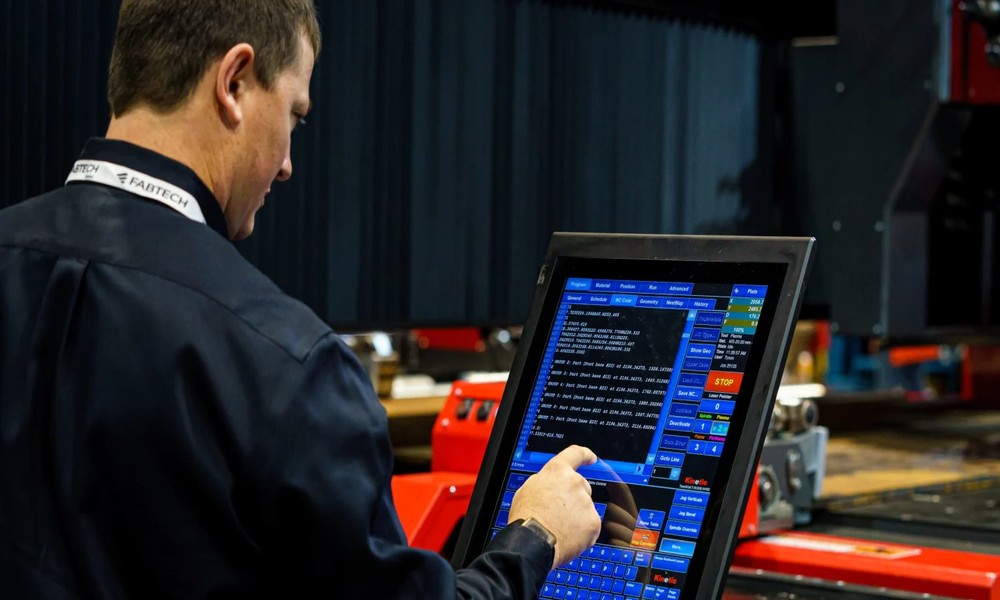

Let’s be honest: when you think of a lineman, you probably picture a gritty individual hanging off a pole in a thunderstorm, fighting the elements to get the lights back on. And while that classic image isn’t going away, the “office” for a modern lineman is looking a lot more like something out of a sci-fi movie. We’re in 2026, and the days of just “winging it” with a pair of pliers and some grit are long gone.
The utility industry is currently pouring billions into digitalization. Why? Because the grid is getting more complex by the second. Between EV charging surges and renewable energy spikes, the guys and girls in the buckets need more than just muscle; they need precision. From advanced lineman tools to high-tech lineman supply kits, the revolution is here, and it’s making the job safer, faster, and-dare I say-a little bit cooler.
Precision in the Palm of Your Hand: Modern Hand Tools
Remember when prepping a high-voltage cable felt like performing surgery with a butter knife? Those days are buried. Take a look at something like the Speed Systems Cable Prep Kit (CPK-4). This isn’t just a bag of tools; it’s a masterclass in engineering.
In the old days, stripping semi-con or chamfering a cable was a test of patience and steady hands. One slip, and you’ve compromised the connection. The CPK-4 changes the game by including specialized scorers and strippers that ensure every cut is surgical. When you’re installing primary elbows on high-voltage lines, “close enough” doesn’t cut it. Using a kit like this is the difference between a job that lasts forty years and a secondary outage that ruins your weekend.
The Heavy Lifters: Rethinking the Pole Setting Process
Setting a pole used to be a choreographed dance of diesel fumes and heavy chains. While the physics haven’t changed-gravity is still a beast-the equipment has. The modern pole chain and pole setting chain are no longer just “dumb” pieces of steel.
Today’s lifting and rigging equipment is designed with higher strength-to-weight ratios and better ergonomics. We’re seeing more integrated load-monitoring sensors that tell the operator exactly how much tension is on the line in real-time. It’s like having a digital spotter that never blinks. Using a high-quality pole setting chain ensures that when that 40-foot stick of timber (or steel) is going into the ground, it stays vertical and secure, protecting the crew and the equipment.
Rigging Safety: Because There Are No Small Mistakes
If there’s one thing every Texas lineman knows, it’s that the wind doesn’t care about your schedule. Rigging safety is the heartbeat of every job site. Whether you’re hoisting a transformer or tensioning a span, your lineman accessories-like shackles, slings, and hoists-are the only things standing between a successful day and a catastrophic failure.
The shift toward synthetic materials in rigging has been a literal weight off our shoulders. Synthetic slings are lighter, easier to inspect, and often stronger than their wire-rope ancestors. But with new tech comes a need for new habits. We’re now using mobile apps to track the “birth certificate” of every piece of rigging equipment, ensuring that no worn-out sling ever makes it onto the hook.
Digital Twins and the Virtual Grid
Wait, “Digital Twins”? Sounds like a bad 90s movie, right? In reality, it’s one of the biggest leaps in lineman supply history. Utilities are now using LiDAR to create 3D digital replicas of the entire grid.
Before a crew even leaves the yard, they can “walk” the job site virtually. They can see exactly where the obstructions are, measure the lean on a pole, and decide which lifting and rigging equipment they’ll need. It’s like having a superpower that lets you see around corners. This kind of prep work reduces “truck rolls” and keeps crews out of harm’s way until the plan is airtight.
The Human Element in a Tech-Driven World
Despite all the fancy sensors and the Speed Systems Cable Prep Kit (CPK-4), the soul of the trade is still the person in the boots. Studies show that nearly 25% of the utility workforce is approaching retirement age. This means we’re in a race to pass down “the knowledge” to the next generation.
Digital tools aren’t just for making the work easier; they’re for making it more intuitive for the “green” guys. High-tech lineman accessories and automated systems act as a safety net, allowing newer linemen to gain confidence without the trial-by-fire risks that the old-timers faced.
Conclusion
The utility landscape is changing faster than a Texas bluebonnet bloom in spring. From the surgical precision of the Speed Systems Cable Prep Kit (CPK-4) to the brute strength of a modern pole setting chain, the tools of the trade are evolving to meet a high-demand, high-tech future. By prioritizing rigging safety and embracing the latest lineman supply innovations, we aren’t just keeping the lights on-we’re building a grid that’s smarter, safer, and ready for whatever the next century throws at it.
Keep your climbers sharp and your sensors charged; it’s a whole new world up there on the wires.
Frequently Asked Questions (FAQs)
1. Why is the Speed Systems Cable Prep Kit (CPK-4) considered better than individual tools? The CPK-4 is a curated “system” of tools designed to work together for specific high-voltage cable tasks. It ensures that every step-from stripping to chamfering-is done to the exact manufacturer specifications, which reduces the risk of cable failure due to human error.
2. Can I use any chain as a pole setting chain? Absolutely not. A pole setting chain must be “Grade 80” or higher and specifically rated for overhead lifting. Using a standard transport chain for setting poles is a massive safety violation and can lead to equipment failure.
3. What is the most important aspect of rigging safety in 2026? Beyond using the right lifting and rigging equipment, the most important factor is regular, documented inspections. Modern rigging often includes RFID tags or barcodes that allow linemen to check the safety status and load limits of a sling instantly on their phone.
4. How do digital tools help with the current labor shortage in the utility sector? Digital tools like 3D grid modeling and automated lineman accessories help bridge the “experience gap.” They provide more data to younger workers, making the job safer and reducing the steep learning curve traditionally associated with linework.
5. Are traditional hand tools becoming obsolete? Not a chance. While automated tools are great, a lineman will always need high-quality manual lineman tools for those situations where tech isn’t an option. Think of the new tech as a power-up, not a replacement for the fundamentals.
