
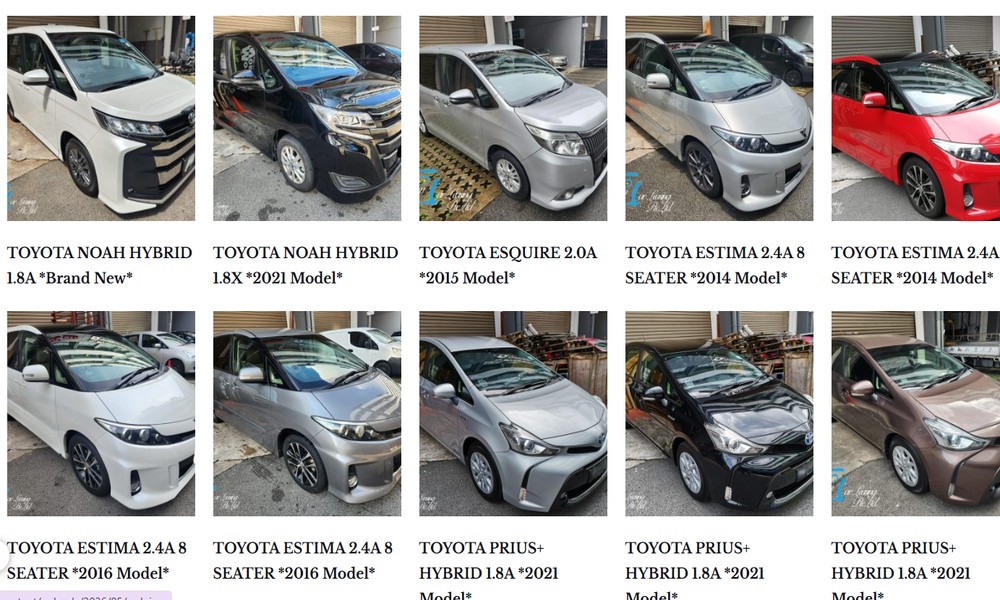

Car rental refers to the short-term hire of motor vehicles by individuals or corporate entities through licensed rental agencies. Unlike long-term leasing, which typically spans several years, car rental serves temporary transport needs for periods ranging from 24 hours to one month. These services are regulated by the Land Transport Authority (LTA) and involve specific legal requirements regarding licensing, insurance, and road usage.
Due to the high-cost vehicle ownership environment, car rental in Singapore is an excellent alternative for residents and an essential mobility solution for international visitors.
Types of Car Rental in Singapore
Before seeking affordable car rentals in Singapore, you need to be familiar with the vehicle categories. These are generally segmented by engine capacity (cc) and vehicle type, reflecting the COE category system. Choosing the correct vehicle type is critical for managing fuel costs and navigating urban parking structures.
| Vehicle Category | Engine / Body Type | Common Models in SG | Best Use Case |
| Economy / Compact | Under 1600cc (CAT A) | Honda Fit, Toyota Vios | City driving, solo travellers |
| Executive Sedan | Above 1600cc (CAT B) | Toyota Camry, BMW 3 Series | Business meetings, comfort |
| SUV / MPV | 5-7 Seaters | Honda Freed, Mitsubishi Outlander | Families, group travel |
| Luxury | High-performance / Continental | Mercedes-Benz S-Class, Porsche | Weddings, premium events |
| Commercial | Vans / Cargo | Toyota Hiace, Nissan NV200 | Moving goods, logistics |
Car-Sharing vs. Traditional Rental
It is important to distinguish between traditional rental and car-sharing platforms (e.g., GetGo, Tribecar). Traditional rental usually requires pick-up from a central depot and daily rates, while car-sharing allows for A-to-B trips or hourly bookings via mobile applications.
Rental Requirements and Eligibility
To maintain road safety, rental providers enforce strict eligibility criteria. These are based on both Singaporean law and insurance provider mandates.
1. Licensing Standards
- Singapore Residents: Must possess a valid Class 3 or 3A driving licence. P-Plate (Probationary) drivers are often excluded by most rental firms or subject to higher insurance excesses.
- Foreign Visitors: Visitors can drive using a foreign licence for up to 12 months. However, if the licence is not in English, an International Driving Permit (IDP) or an official English translation is mandatory.
2. Age and Experience Thresholds
While the legal driving age is 18, most rental companies in Singapore set a minimum age of 23 and require at least 2 years of driving experience. Some young driver programmes allow 21-year-olds to rent but apply a significant daily surcharge and a higher insurance deductible.
Insurance and Liability Coverage
Insurance is the most complex component of car rental in Singapore. Under Singapore law, all vehicles must have at least third-party insurance.
Understanding the Excess System
Most rentals include Collision Damage Waiver (CDW). This does not mean zero liability; rather, it limits your financial responsibility to a pre-set amount known as the Excess.
- Standard Excess: Often ranges from SGD 2,000 to SGD 5,000 for standard cars.
- Excess Reduction / Super CDW: An optional daily add-on (approx. SGD 15-30/day) that can reduce the excess to as low as SGD 500 or zero.
Third-Party Liability
This covers damage caused to other people’s property or injuries to third parties. In Singapore, this is almost always included in the base rental rate.
Electronic Road Pricing (ERP) and Urban Navigation
Singapore uses a gantry-based toll system known as Electronic Road Pricing (ERP) to manage traffic congestion.
How ERP Works for Renters
Every rental car is equipped with an In-vehicle Unit (IU) or the newer OBU (On-Board Unit) for ERP 2.0.
- Payment: Drivers must insert a stored-value card (NETS FlashPay, EZ-Link, or Autopass) into the IU.
- Costs: Charges vary by location and time of day, typically ranging from SGD 0.50 to SGD 6.00 per gantry.
- Responsibility: Renters are responsible for ensuring the card has a sufficient balance. Failure to pay results in a fine from the LTA, which the rental company will pass on to the renter along with an administrative fee.
Fuel Policy and Additional Costs
Transparency in budgeting requires an understanding of secondary costs that are not included in the headline rental rate.
1. Fueling Policies
- Full-to-Full: The most common policy. You receive the car with a full tank and must return it full. Failure to do so results in a refuelling charge at a premium rate (often SGD 5-10 per litre) plus a service fee.
- Pre-Purchase: You pay for a full tank upfront and return the car empty. This is rarely cost-effective unless you plan to use exactly one full tank.
2. Parking in Singapore
Parking is rarely free.
- HDB/URA Carparks: Use the Parking.SG app or a CashCard.
- Shopping Malls/CBD: Charges are usually hourly. Always check if the grace period applies (usually 10-15 minutes).
3. Cross-Border Surcharges
Renting a car in Singapore to drive into Malaysia requires explicit permission.
- Surcharges: Expect a daily Entry to Malaysia fee (SGD 20-50/day).
- Insurance: Standard Singapore insurance may not cover theft or accidents in Malaysia without a specific extension.
Rental Duration and Pricing Structures
Pricing is dynamic and influenced by the COE supply and seasonal demand (e.g., Chinese New Year).
- Daily Rental: Best for errands or short trips. Rates for an economy car typically start at SGD 70-90 per day.
- Weekend Packages: Usually from Friday afternoon to Monday morning. These often offer a 10-15% discount compared to daily rates.
- Monthly Leasing: Suitable for expats or those awaiting a new car. Monthly rates can significantly lower the daily cost, starting from SGD 1,600-2,200.
Frequently Asked Questions (FAQ)
Can tourists rent a car in Singapore?
Yes. Tourists can rent a car using their home country’s valid driving licence for up to 12 months. An International Driving Permit (IDP) is required if the licence is not in English.
What happens if I get a traffic fine in a rental car?
The rental company will receive the notice from the Traffic Police or LTA. They will nominate you as the driver, and the authorities will send the fine to your address. The rental company usually charges an administrative fee (SGD 30-50) for this process.
Is there a mileage limit?
Most local rentals include unlimited mileage within Singapore. However, if you are driving to Malaysia, some companies may impose a cap or an additional “mileage surcharge.”
What is the Young Driver surcharge?
This is an additional fee for drivers under 23 (or sometimes 25). It accounts for the higher insurance premiums the rental company must pay for less experienced drivers.
Can I pick up a car at Changi Airport?
Yes, major international brands like Hertz, Avis, and Budget have counters at Changi Airport Terminals 1, 2, 3, and 4. Local boutique firms may offer meet and greet services at the arrivals hall.
Hire a Car with Ease in Singapore
Car rental in Singapore is a highly regulated and efficient service that offers an essential alternative to the high costs of vehicle ownership. By understanding the nuances of the Excess system, the technicalities of ERP 2.0, and the strict licensing requirements, both residents and visitors can navigate the city-state with confidence. Early booking, especially during festive periods and a thorough review of insurance exclusions are the best strategies for a cost-effective and stress-free rental experience.
If you are looking for a reliable car rental in Singapore, contact now to discuss the right package for your needs.
