
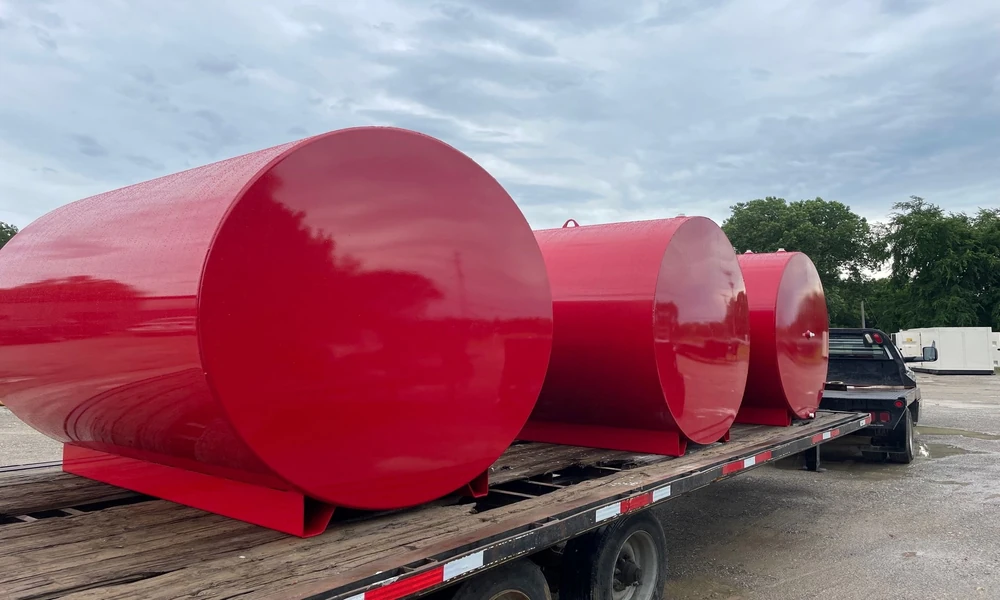

Anyone specifying a fuel storage system eventually hits the same fork in the road: single wall or double wall? The terms sound self-explanatory, and in a literal sense they are. But the practical differences run deeper than wall count – they shape permitting, site layout, insurance costs, and how the tank ages over the next twenty or thirty years.
Understanding why the distinction exists, rather than picking whichever option simply sounds safer, makes for a far better buying decision.
The Basic Construction Difference
A single-wall tank is exactly that: one shell holding the product, with nothing built into the tank itself to catch a leak if that shell is breached. It was long the default design for both aboveground and underground fuel storage, and it’s still common wherever separate, external containment handles the job instead – a concrete berm around an aboveground tank, for example.
A double-wall tank adds a second shell around or inside the first, creating a sealed interstitial space between the two. That gap is the entire point of the design. If the inner tank develops a leak, product collects in that space instead of the surrounding soil, and a monitoring device – a gauge, sensor, or vacuum system – flags the problem before it ever reaches the environment.
Why Single-Wall Tanks Haven’t Disappeared
Single-wall tanks remain a legitimate choice in the right setting. They’re generally lower cost to fabricate, lighter, and simpler to inspect from the outside. For low-hazard liquids, smaller volumes, or sites where an engineered dike already catches a release, a single-wall tank paired with external secondary containment can meet code without the added expense of an integrated interstitial space.
Where single-wall construction runs into trouble is scale and proximity to sensitive areas – near a water source, in a flood zone, or close to a property line. In those cases, regulators and insurers increasingly expect containment to travel with the tank rather than depend entirely on a separate structure.
What the Second Wall Actually Buys You
The value of a double-wall tank isn’t really about strength – it’s about early warning. Because the interstitial space is monitored, a leak is usually caught while it’s still small and containable, rather than after it has migrated into soil or groundwater. That difference matters financially, too: remediation after an undetected release is almost always far more expensive than the incremental cost of building in a second barrier from the start.
Double-wall construction also tends to simplify siting. Because the tank effectively carries its own secondary containment, it can often sit closer to buildings or property lines than a single-wall tank would be allowed, reducing or eliminating the need for a poured containment dike on tight sites.
Where the Regulations Point
Federal rules don’t mandate double-wall construction outright, but they lean on it as a straightforward path to compliance. For underground storage tank systems, provisions tied to the 2005 Energy Policy Act require secondary containment – including interstitial monitoring – for new or replaced tanks installed near drinking water sources, and a monitored double-wall tank is one of the accepted ways to satisfy that requirement. The specifics of how this containment obligation applies are laid out by the EPA.
Aboveground tanks fall under a different framework – the Spill Prevention, Control, and Countermeasure (SPCC) rule – but the underlying logic is similar. A shop-fabricated double-wall tank built to recognized standards is widely treated as satisfying the rule’s secondary containment expectations on its own, provided it includes basics like overfill protection and monitored product transfers. None of this outlaws single-wall tanks; it just means double-wall systems tend to check more regulatory boxes with less added site infrastructure.
The Standards Behind the Steel
Neither configuration means much without a recognized standard behind it. Shop-fabricated steel tanks are typically built to Underwriters Laboratories’ UL 142 standard, which sets steel thickness requirements based on tank diameter and capacity.
Once a tank is in service, the Steel Tank Institute’s SP001 standard governs how it gets inspected – from visual checks of the shell and coating to ultrasonic thickness testing that tracks corrosion over time.
Notably, SP001 treats the two designs differently: because a monitored double-wall tank already has built-in leak detection, it’s typically exempt from some of the periodic inspection requirements that apply to single-wall tanks relying on separate containment.
Cost, Lifespan, and Maintenance in Practice
On pure purchase price, single-wall tanks usually cost less, which can matter on tight budgets or smaller, lower-risk jobs. But total cost of ownership tells a fuller story. Double-wall tanks reduce or eliminate the need for a separate containment structure, cutting civil and concrete costs during installation.
They also tend to carry stronger corrosion protection, since the outer wall shields the primary vessel from direct soil or weather exposure – one reason many manufacturers back double-wall steel tanks with warranties running two to three decades.
Maintenance looks different, too. A single-wall tank with external containment needs that structure inspected on its own schedule – checking a concrete berm for cracks, for instance. A double-wall tank consolidates that work into monitoring the interstitial space, which is usually faster to check over the tank’s service life.
Matching the Tank to the Application
The right answer usually comes down to what’s being stored, how much, and how close the tank sits to something worth protecting.
Retail fueling stations, aviation fuel farms, and marinas lean toward double-wall systems almost by default, both for insurance reasons and because interstitial monitoring makes ongoing compliance easier to document.
Backup generator fuel supplies for data centers and hospitals follow similar logic, since these tanks often sit close to occupied buildings where site space is at a premium – which is why operators in that space frequently choose aboveground storage systems with an integrated double wall rather than a separate berm.
Agricultural and remote construction sites sometimes still specify single-wall tanks, particularly for smaller volumes stored well away from waterways, where portability and lower upfront cost outweigh the value of built-in containment.
Manufacturers serving these sectors – Tex Tanks is one example – generally recommend starting the conversation with the hazard and site profile rather than the tank type, since the right containment approach follows from those constraints rather than the other way around.
Making the Call
A few questions tend to settle the decision quickly:
- How close is the tank to a water source, waterway, or occupied structure?
- Does the site have room for a poured containment dike, or is space tight?
- What does the applicable state or local fire code require for this product and volume?
- What’s the realistic cost of a slow, undetected leak at this location – not just cleanup, but downtime and reputational exposure?
Double-wall construction has become the more common default for good reason, but it isn’t a universal requirement. Understanding why the distinction exists is more useful than defaulting to whichever option sounds safer on paper.
